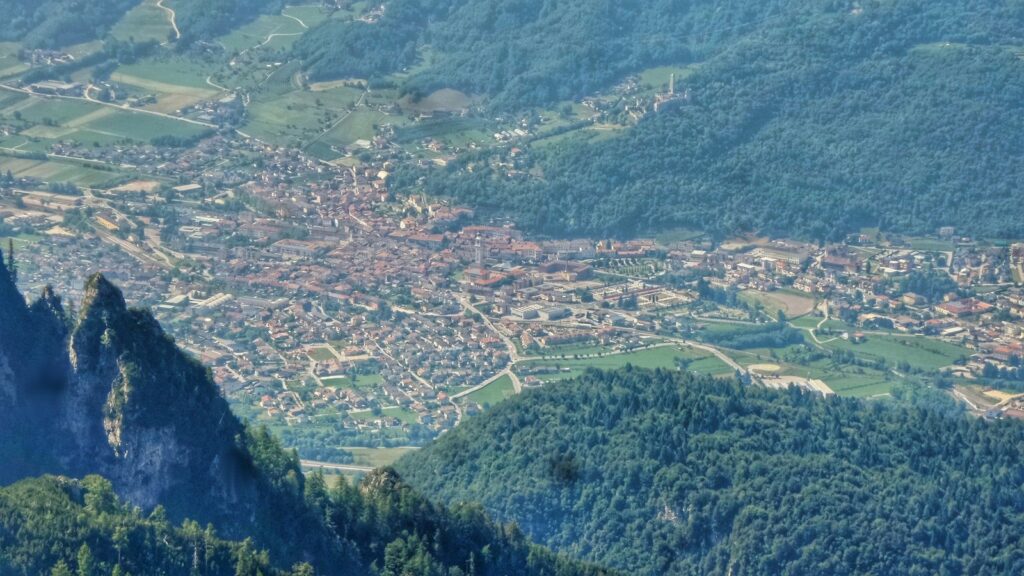
For anyone planning a Valsugana holiday, the choice tends to fall between a few fairly defined stay profiles: the lake with the children, the spa with strolls in between, the bicycle along the cycle path, hiking on the Lagorai, or some combination of all four. The valley has a mature stock of accommodation, distributed reasonably evenly between historic hotels, agriturismi, residences and campsites, and public connections with Trento and Bassano del Grappa run on a regular schedule. This guide collects the essential information for organising a stay in Valsugana in 2026: seasonality, lodging, getting around inside the valley, what to pack, and a few suggestions on how to spread the days.
When to go: a Valsugana holiday month by month
June. The month when the valley opens its full season. The Lagorai alpine huts start becoming accessible, the lakes reach 19-21 degrees in the last third of the month, and the cycle paths are clear. Tourist numbers stay moderate until the solstice: this is the ideal time for anyone wanting to avoid the crowds. The average climate on the valley floor swings between 13 and 25 degrees, with the possibility of afternoon storms over the higher ground.
July. Genuine high season. The lakes climb above 23 degrees, nights rarely drop below 16, and the terraces of the alpine huts serve until late in the evening. This is the time of the main sporting and cultural events on the shores of Caldonazzo and Levico, of music festivals in the spa parks, of rowing regattas. It is worth booking ahead, especially the historic campsites and the lakefront hotels.
August. The busiest month, particularly across the central weeks. The crowd is mostly Italian (Venetians, Lombards, Emilians) with a substantial Austrian and German element in the four-star hotels. The lakes touch 24-25 degrees and the lidos run from 9am to 7pm. We would suggest scheduling high-altitude hikes for the early hours of the morning, both because of the heat and to reduce the risk of afternoon storms.
September. A consistently underrated month. The first third still holds bathing temperatures with fewer crowds, the second is already autumnal but with the woodland colours in full transformation. The huts stay open until mid-month, the trails are in optimal condition, and prices fall. This is the period that many families without school constraints prefer.
October-November. The season of foliage and mid-altitude hikes. The lakes are no longer swimmable but the lakeside walks and the cycle path remain ridable with the right kit. The Levico spa keeps operating, and from mid-November the Christmas market season opens, drawing in Levico and Pergine.
December-March. The valley floor is not a ski destination: for alpine skiing you need to head up to Folgaria-Lavarone or the Lagorai passes. Valsugana in winter is a spa and cultural option, with short breaks oriented to wellness and to day trips to Trento. Snow falls but does not lie consistently.
April-May. The reopening. The alpine huts come back to life in late April, the cycle path is already ridable, and seasonal businesses resume. It is the moment of the flowering in the spa parks.
Where to stay
Accommodation is concentrated around three main hubs, each with its own character.
Levico Terme and the surrounding area
This is the most developed hub, with historic spa hotels in the local tradition, a few four-star properties, and a good network of residences and B&Bs in the centre. Levico is the natural choice for travellers building spa days into their holiday, or for anyone looking for an evening walk inside a serious urban park. The lake is a few minutes on foot from the centre.
Caldonazzo, Calceranica, Tenna
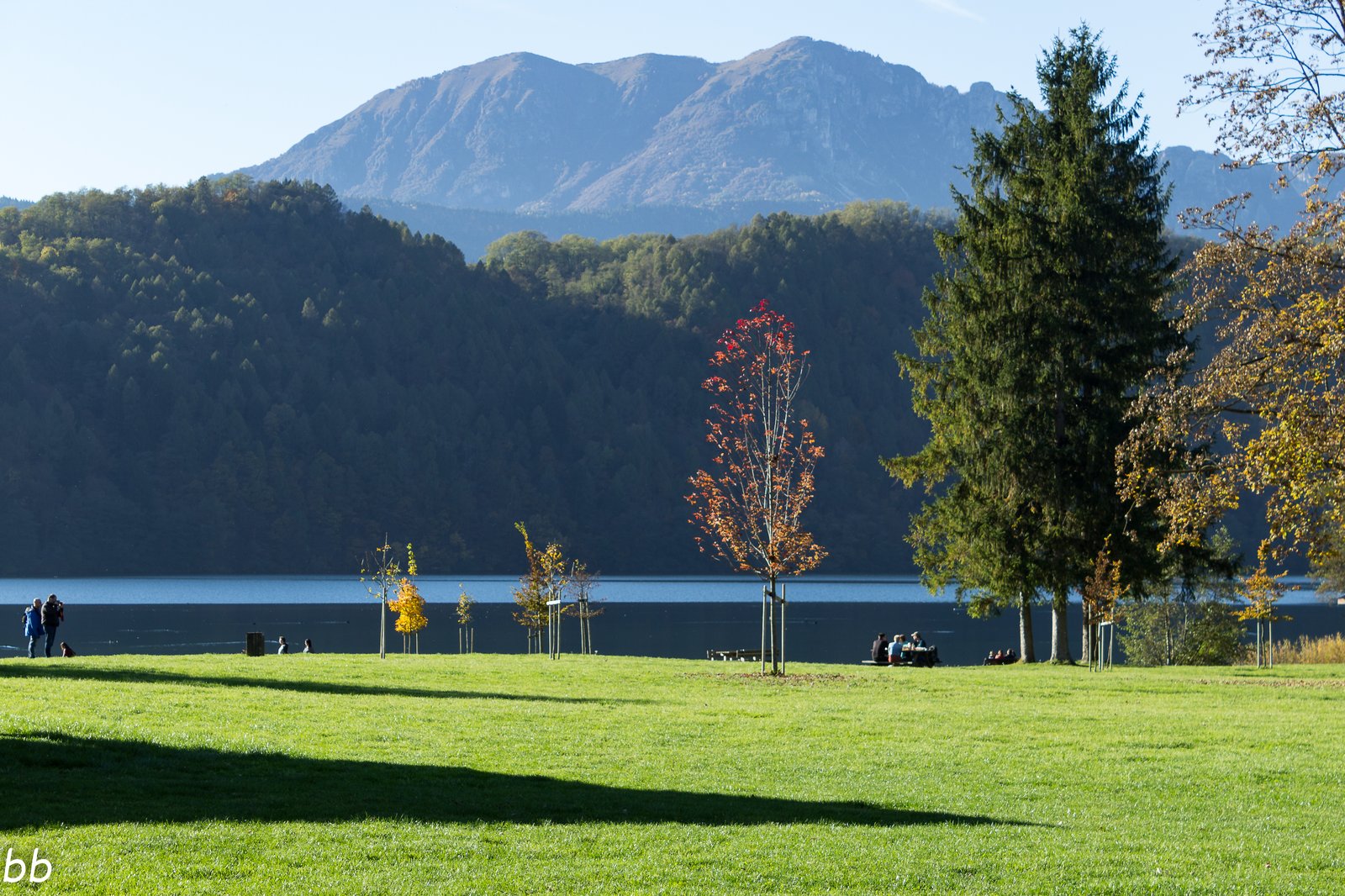
The three villages on the shores of Lake Caldonazzo offer mostly residences, agriturismi and campsites. This is the zone for families with small children and for anyone who wants a holiday made of the lake and not much else. Calceranica and Caldonazzo have equipped beaches and a workable bike rental network. Tenna, on the slopes above, gives access to its own little lake and to quiet paths.
Pergine, Borgo Valsugana and the rest of the valley
Pergine Valsugana is a lively town, the historic seat of local government, with an offer that is more urban than tourist-led but several good-standard properties and a strategic position for reaching both the lakes and Trento. Borgo Valsugana, further down, is a sound base for visiting the Lagorai and for those after a stay in the style of the historic boroughs. Along the rest of the valley you find numerous agriturismi in the mid-slope hamlets, generally at lower prices and with breakfasts built on local products.
How to get here
By train. The Valsugana railway links Trento to Bassano del Grappa across the whole length of the valley, with stops at Pergine, Caldonazzo, Levico, Borgo, Strigno and other centres. It is a scenic line, panoramic, with journey times that are not always fast but are very reliable in the tourist months. From Trento it takes about twenty minutes to Pergine and a little over half an hour to Levico. From Bassano del Grappa, the run to Borgo Valsugana takes around forty-five minutes. The integrated ticketing allows you to take a bike on board for a modest supplement.
By car. The SS47 trunk road links Trento to the Veneto. Trento to Levico is around twenty-five kilometres (25-30 minutes); from Verona the valley is reachable in just under two hours via the A22 and the SS47; from Padua it is about an hour and a half via Bassano. Car parks in the tourist centres are part free and part paid; in July and August it pays to reach the lakes before 10am to find a spot close to the lidos.
By air. The reference airports are Verona Villafranca, Venice Marco Polo and Treviso Sant’Angelo. Verona is the most direct, with car rental in the terminal and journey times of just under two hours. Venice and Treviso work for international arrivals but call for a longer transfer, around two and a half hours.
Getting around inside the valley
In the summer months the simplest and most effective way to get about is on a bicycle: the Valsugana cycle path is paved, well signed and flat as far as Borgo. The main towns offer e-bike and standard bike rentals, generally with daily rates of between 15 and 35 euro depending on the machine. Local public transport is run by Trentino Trasporti, with buses that complement the railway, particularly to reach the mid-slope hamlets and the trailheads of the Lagorai. For anyone staying away from the centres, the car remains convenient but is not always necessary.
What to pack
For a standard summer holiday it makes sense to bring lightweight valley-floor clothing, a long-sleeved layer and a fleece for the evenings (nights often drop below 18 degrees even in July), sturdy walking shoes if you plan to climb the Lagorai, swimwear and beach sandals, and a light waterproof for afternoon storms. For the spa it helps to bring your own bathrobe (the bathhouses do provide one, but in some wellness centres it is more comfortable to have your own). For the bicycle it is worth bringing a helmet, even though it is not compulsory, and a rear light for the tunnels on the lower section of the cycle path.
A sample week of holidays in Valsugana
A non-prescriptive proposal, to be adapted to your own pace and interests. Day 1: arrival, check-in, first evening walk in Levico, dinner in the centre. Day 2: a day on Lake Caldonazzo, a lido on the Calceranica side, lunch at an alpine hut on Tenna. Day 3: morning at the Levico spa, free afternoon in the Habsburg park. Day 4: the Valsugana cycle path from Pergine to Borgo, train back. Day 5: a hike on the Lagorai, chosen by fitness level (Cima Cece for the experienced, Forcella di Valsorda for families). Day 6: Borgo Valsugana and the Austro-Hungarian forts, a historic lunch, afternoon in Strigno. Day 7: Lake Levico, a slow day, departure in the afternoon.
What to budget for
The 2026 prices of a Valsugana holiday remain substantially lower than those of the Ladin valleys. A double room in a three-star hotel in high season typically lands between 90 and 140 euro a night with breakfast; a four-star spa hotel in Levico runs between 150 and 220. Lakeside campsites offer standard pitches at around 30-45 euro a night for two people and a car. A lunch at an alpine hut averages between 18 and 28 euro per head; a menu of trout or gnocchi at a valley trattoria sits between 25 and 35 euro. The Levico spa applies different rates for medical entries (with a prescription or cure package) and daily wellness entries; for current details it is worth consulting the facility’s official website.
What to expect, and what not to
Valsugana is not a spectacular destination in the sense of the Dolomites proper: anyone after vertical walls, glaciers and panoramic cable cars will find more material in Val di Fassa or on the Pale di San Martino. The value of Valsugana is of a different order. It is a very liveable mid-altitude valley, well served, with a rare mix of water, spas and trails, reasonable prices, and a density of villages and trattorias that makes any day easy to assemble. It works very well for families, older couples, cyclists, and groups of friends after an active but not extreme week. It works less well for travellers seeking pure high-altitude terrain or serious mountaineering.
- The Valsugana lakes — Caldonazzo, Levico, swimming and surroundings.
- Levico Terme — the spa town and its Habsburg park.
- The Valsugana cycle path — 80 kilometres from Trento to Bassano.
- The history of Valsugana — the forts, the Great War, the post-war years.
- Back to the home page